|
|
Last Modified on Feb 05, 2026
Over the past five years, there have been 67,149 OVI car crashes, 3,468 of which were fatal. There have been 90,513 arrests. 30% of those arrests were repeat offenders (Ohio State Highway Patrol).
Willowick Police Department Lieutenant Keith Lawrence has been in law enforcement for 15 years.
“Usually, we don’t know that this is going to be an OVI crash when we respond to it. That’s something that kind of develops as we’re on scene,” Lawrence said.
After establishing that necessary medical attention has been received, the standard procedure for officers is to conduct field sobriety tests (SFSTs). Lawrence explained the three main SFSTs: the horizontal gaze nystagmus test, the walk and turn and the one leg stand. These tests present different indicators of intoxication.
The horizontal gaze nystagmus (HGN) test requires officers to examine the movement of a driver’s eyes. By doing so, they look to see involuntary rhythmic eye movements. However, the Walk and Turn (WAT) and One Leg Stand (OLS) tests assess the balance and coordination of the person.
“We take the totality of all these tests, all our observations and all the clues on scene, their appearance, the smell. Is there a half-empty beer can in the center console? Did they admit to drinking beforehand? All this stuff, we take into account with the tests and the clues, and then we make a decision whether, we’re going to arrest this individual or not,” Lawrence said.
Criminal defense attorney and owner of Fortress Law Group Matthew Bangerter uses his master’s degree in biochemistry as tool for building a science-based defense.
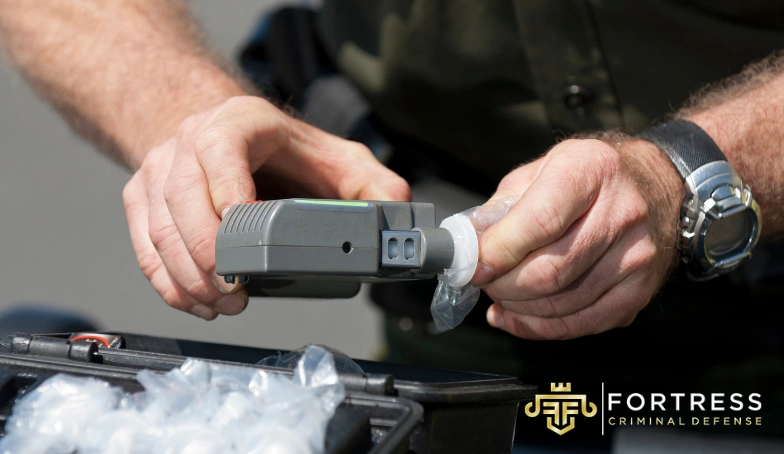
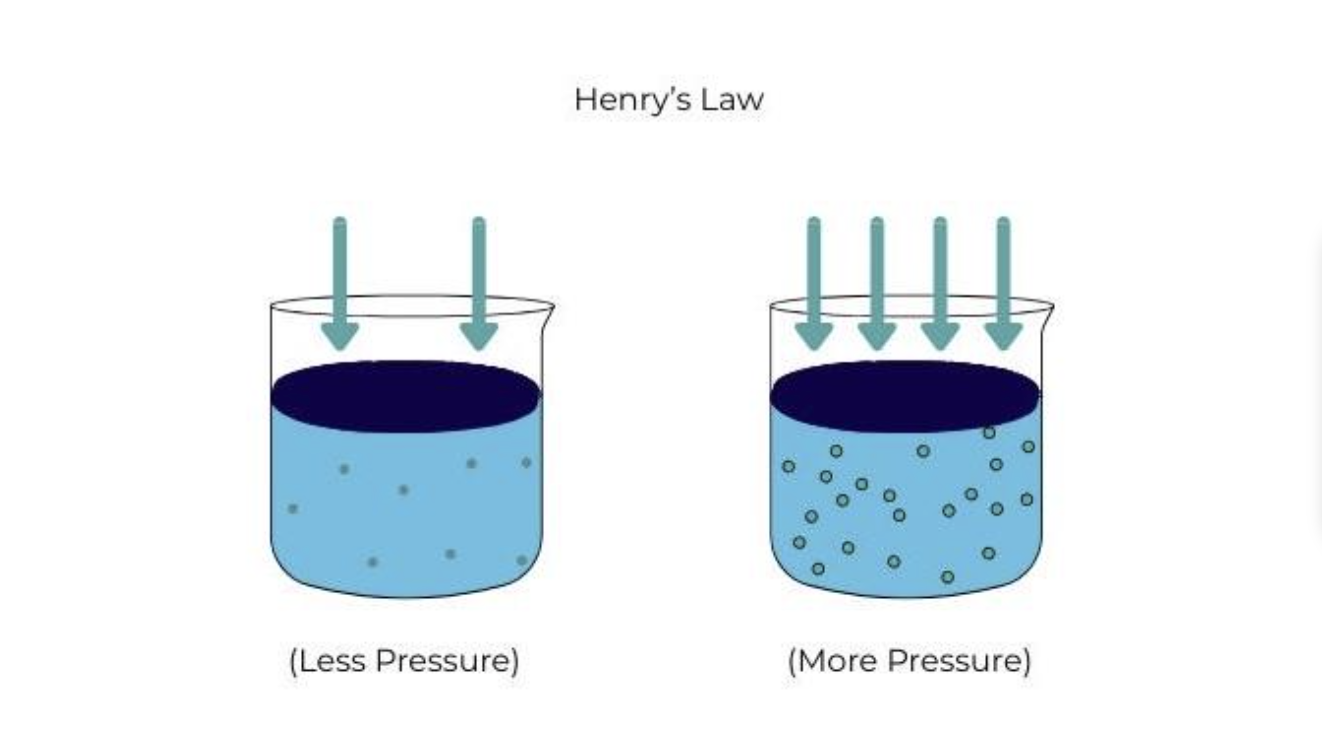
He said that when a person blows into the chamber of the breathalyzer, it triggers an infrared laser which detects how much of the laser is absorbed by alcohol. This uses a principle called Henry’s Law.
“Henry’s law says you can tell the proportion of a gas in the air above a liquid in a sealed jar. So, if you know what percentage of the concentration is in the air, then you know what concentration is in the liquid part of it. They apply that to the breath machine. Then, they say, ‘If there’s that much in your breath, then there must be that much in your lungs or in your blood.’ That’s called a partition ratio.

He said the whole principle is based on a closed system.
“If you screw the lid on a jar and no air gets in and out, then that formula works,” Bangerter said. “But our lungs aren’t a closed system. They’re open to the air. So, there’s a number of things like that applied in OVIs which just isn’t scientifically sound.”
Bangerter said the function of the breathalyzer itself is not a bullet-proof method of proving intoxication.
“A problem with that is that everybody’s different,” Bangerter said. “Everyone’s partition ratios, so to speak, are different because they’re all humans. It changes based on temperature, and everyone’s body temperature varies within a few degrees, which can have a huge impact on it.”
Beyond the lack of scientific proof, Bangerter said where police officers spend up to a week’s worth of time training to receive certification to administer SFSTs, drivers face a different reality.
“For those days, they practice it dozens of times until they can get it right,” Bangerter said, “Then, they pull a person over who’s never gotten the classes, who hasn’t practiced it dozens of times, in the middle of the night on the side of the freeway with semi-trucks flying by right next to them. They tell you the instructions one time, and then if you don’t get it right, they say you failed, and you’re probably intoxicated.”
Breath tests are an important tool in building a client’s defense. Because of the inherent inaccuracies in these tests, Bangerter relies on the Ohio Administrative Code when he is asking questions.
“You have to observe the person for 20 minutes before they take the test to make sure they don’t put anything in their mouth or throw up. Anything like that will affect it,” Bangerter said. “They have to run control tests with a blank gas canister to make sure that it’s zeroed out. They have to run it twice. Each breath test needs to be within a certain amount. If the two measurements are too far apart, there could be something wrong with the machine. There has to be no radio frequency interference in the room. So, if it’s sitting right next to a bunch of computers that could affect it. And then, of course, the maintenance logs have to be all up to date.”
These variables are reasons why Bangerter always advises his clients to refuse SFSTs. While it is well within their rights to refuse a chemical test (breath, blood or urine), there are certain consequences attached.
If people refuse to take the tests, they risk suspension of their driver’s licenses. This is because of Ohio Revised Code 4511.191 or the “Implied Consent Law.” In the state of Ohio, if someone is lawfully arrested for an OVI, they are deemed to have agreed to submit to taking a chemical test. Tests like HGN, WAT and OLS are not included in this code.
It is within someone’s right to refuse SFSTs and chemical tests. SFSTs are considered voluntary, conducted before an arrest and do not have automatic license suspension if refused. Chemical tests are conducted after a lawful arrest and if refused will result in immediate suspension of a driver’s license.
From a criminal defense perspective, Bangerter focuses on mitigating these charges. He often advocates for his clients to be admitted into diversion programs including the Driver Intervention Program (DIP).
DIP is an “alternative to the mandatory three-day jail term that first-time offenders convicted of operating a vehicle under the influence of alcohol or other drugs may attend at the court’s discretion.”
This program includes educational courses on traffic safety as it pertains to drugs and alcohol and group discussions. According to the Department of Behavior Health website, this two-to-three-day course curriculum covers physical, psychological and social consequences of alcohol and drug use; the effects of these substances on driving performance; legal definitions of impairment; symptoms and progression of substance abuse; penalties such as license suspension, fines and incarceration; and available treatment and self-help resources.
However, for repeat offenders, building a defense may look different. Bangerter said he looks at whether the case was handled properly.
“If a person plead guilty and they did not have an attorney, the prior conviction cannot be used against them,” Bangerter said.
In Ohio, if someone pled guilty or no contest without having an attorney, and there are no records supporting the defendant knowingly, intelligently and voluntarily having waived their right to counsel, then a prior conviction cannot be used to enhance penalties of a potentially new conviction.
In terms of arrests, Lawrence said pulling over repeat offenders it is not a rare occurrence.
“I would say 60-40,” Lawrence said. “If we’re investigating an OVI and arresting somebody for an OVI, I would say 60% of the time they’ve had at least one.”
Although Lawrence sees these cases frequently, he still advises against operating a vehicle while under the influence of drugs or alcohol.
“Don’t do it. It’s not worth it,” Lawrence said. “I know people who have lost family members from drunk driving accidents, both the driver I’ve known, and the person who was killed. It’s a very serious thing. The stakes are too high. We have Uber and Lyft. It’s easier now than ever to get a ride if you need it.”
While Bangerter advises the same, he also acknowledges these situations do happen, and it is important to hire an attorney that will show support and push for the best possible outcome for their clients.
So, if you’re between headlights and handcuffs, remember the most important thing you can do for your defense is know your rights. Call (440) 340-1740 for consultation.