|
|
Last Modified on Aug 28, 2026
Matthew Bangerter has cloned his own DNA.
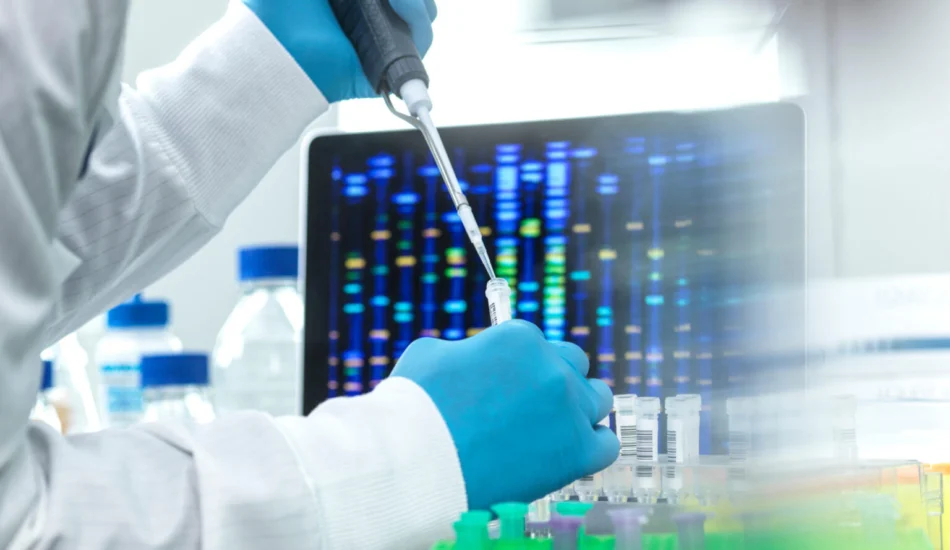
That is a literal description of laboratory work, not a figure of speech. Using the polymerase chain reaction, or PCR, he amplified DNA from his own genetic material – the same core technique that underlies modern forensic DNA analysis. PCR is how a crime lab takes a vanishingly small biological sample and multiplies a target sequence into enough copies to type and compare. Understanding how that amplification works, and where it can fail or mislead, is the difference between accepting the state’s DNA evidence and knowing how to challenge it.
The formal credentials behind that work are an undergraduate degree in biology from Case Western Reserve University, graduate coursework in molecular genetics, and a Master of Science in Biochemistry. He has published on the subject for a statewide legal audience in an article titled “DNA Basics for Lawyers.”
Very few criminal defense attorneys in the United States have worked with DNA at the bench. The relevance to a criminal case is specific and practical: the forensic evidence is being read by someone who knows from direct experience what a laboratory does with a sample, and what it can and, more importantly, cannot conclude from one.
The Difference is in the DNA Details
DNA evidence carries more weight with juries than any other category of forensic proof. That weight is often, but not always, deserved. The difference is made in the details that not all attorneys know how to present to a jury.
What a DNA Match Does Say
Scattered through everyone’s genome are short DNA sequences that repeat back-to-back, like a word stuttered over and over on a strip of tape. How many times that word repeats at any given spot varies from person to person, so a lab can count the repeats at about twenty standardized locations and build a profile out of the numbers. These are called “short tandem repeats,” or STRs. The forensic analyst compares that set of numbers to a reference sample.
When the profiles correspond, the laboratory reports a statistic: the probability that a randomly selected unrelated individual would share the same profile. This is the random match probability, and it is often a very small number.
The important point is what kind of statement that is. It is a probabilistic statement about the rarity of a profile in a population. It is not an identification, and the distinction becomes significant as soon as the sample is anything other than a clean, single-source specimen.
Where It Becomes Complicated
Several recurring conditions materially affect what a DNA result can support:
- Mixtures. When a sample contains genetic material from more than one person, determining how many contributors are present and which variants belong to which individual introduces interpretive judgment. The more contributors, the more judgment, and the less the reported statistic resembles the clean number a jury imagines.
- Partial and degraded profiles. Environmental exposure, age, and small sample quantity can yield results at only some locations. A partial profile is substantially less discriminating than a complete one, a limitation that is often noted in the report and lost in the testimony.
- Low template and touch DNA. Modern methods can generate profiles from very small quantities of biological material, including skin cells left by brief contact. Sensitivity at that level amplifies every other problem on this list. Below a certain quantity of starting material, the result stops being reproducible. One of a person’s two variants at a location can fail to amplify at all, so a true heterozygote types as an apparent homozygote, changing who the profile includes and who it excludes. Foreign DNA present in trace amounts gets amplified with equal enthusiasm, because the reaction has no way to distinguish evidence from contamination. Run the same extract twice and you can get two different profiles.
- Secondary transfer. DNA can reach an object without its source ever touching it, moved by an intermediate person or surface. In other words, if you shake someone’s hand, then open a door, you can leave their DNA on a door handle they’ve never touched. Presence of a profile is therefore not proof of contact with the item on which it was found.
- Probabilistic genotyping software. Complex mixtures are increasingly interpreted using proprietary algorithms. Whether the defense can examine how a particular program reached its result, including access to source code and validation data, remains actively litigated.
- Laboratory conditions. Contamination, sample handling, calibration, and deviation from protocol are ordinary operational risks in any laboratory, and they are documented in records that are not part of the summary report.
- Amplification artifacts. PCR copies repeat sequences imperfectly. The enzyme slips, producing a minor product one repeat shorter than the real one. Analysts call this stutter, and in a mixture a stutter peak from a major contributor sits exactly where a minor contributor’s genuine allele would appear. Deciding which one it is falls to the analyst.
What the DNA Match Cannot Say
Even a clean, single-source, high-confidence match establishes a narrow proposition: that biological material consistent with a particular person was present on a particular item at the time it was collected.
It does not establish when the material arrived. It does not establish how. It does not establish what the person was doing. “His DNA was on the weapon” and “he used the weapon” are different claims, and only the first is a scientific finding. The second is an inference, and drawing it is the jury’s job, not the laboratory’s.
The Lab Report
The report a laboratory issues is a summary. The material that determines whether the summary is sound sits behind it: electropherograms, control sample results, calibration records, analyst notes, documented deviations, and validation data for the methods used.
Obtaining that file and reading it is where problems in DNA evidence are actually found. It requires knowing what the documentation should contain, what a normal control result looks like, and which deviations are trivial and which ones compromise a result. That is a scientific skill applied to a legal question, and it is why this discussion appears on a website about criminal defense.
If you are facing charges involving DNA, toxicology, or other forensic evidence in Northeast Ohio, contact Fortress Law Group to discuss the specifics of the analysis in your case.