|
|
Last Modified on Feb 04, 2026
What is a breath test?
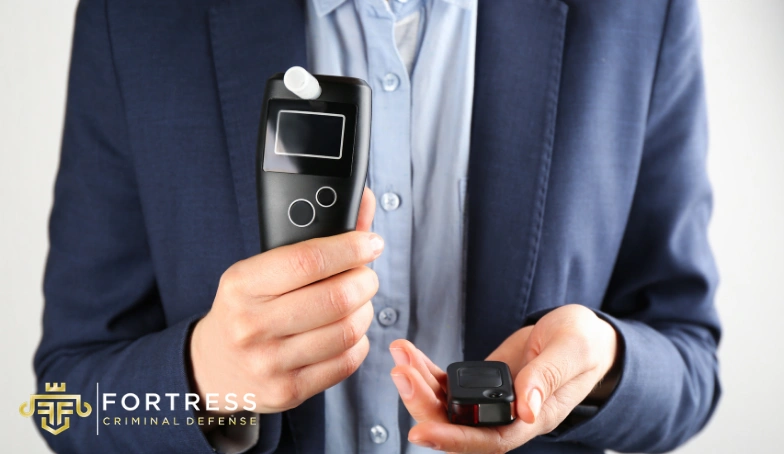
Essentially, a breath test measures the alcohol in a person’s breath and uses that to estimate their blood alcohol concentration (BAC). While this seems simple, it is a much more complex procedure.
As someone blows into the chamber, the machine is measuring the amount of ethanol vapor in exhaled alveolar (“deep lung”) air. From that it estimates the person’s BAC using a fixed assumption called the blood-to-breath partition ratio. The assumption is that 2100 milliliters of breath contains the same amount of alcohol per 1 milliliter of blood. The important distinction here is that breath tests estimate BAC, not measure it. As we have discussed in other articles, these tests rely on factors that differ from person to person and situation to situation.
What is a blood test?
A blood test directly measures the concentration of ethanol in someone’s blood. The result of the test is reported as grams of alcohol per 100 milliliters of blood. While there are no assumptions in this text, it is not without its limitations. Timing places a very important role in the accuracy of identifying someone’s BAC while they are driving.
After driving, your BAC rises during absorption, reaches a peak then falls during elimination. If someone administered the blood test during absorption, that person’s BAC may have been lower at the time they were driving versus if it were drawn after the peak, the BAC could have been higher.
Do I have to take a chemical test, and what happens if I refuse?
Ohio is an implied consent state. This means that by driving in Ohio, you are deemed to have consented to a chemical test if you are lawfully arrested for an OVI. If you refuse the test, there will be an Administrative License Suspension (ALS). Refusing does not automatically mean you will be convicted of an OVI. The State must still prove the case. Understanding the full scope of OVI penalties and how they apply to your situation is critical, especially if you’re facing charges based on test refusal.
How could submitting or refusing the test impact my case?
If you submit to chemical tests (or Standardized Field Sobriety Tests), the result could give the State scientific evidence to pursue the charge. If you refuse the tests, it creates an observation-based case, relying on credibility and video evidence. The strategy you choose can significantly impact your defense, which is why working with an experienced criminal defense attorney in Cleveland who understands both approaches is essential to protecting your rights.
Can a chemical test be wrong?
Yes. Breath tests can be affected by calibration issues, body temperatures, medical conditions, etc. Blood tests can be affected by timing, storage problems or lab errors.
Why does all this matter?
If there is no chemical test because of a refusal, the State loses the strongest piece of evidence it has. It can change how the case is tried in court and whether the driver’s behavior shows impairment beyond a reasonable doubt.
Questions about breath tests or DUI procedures in Ohio? Speak with a qualified DUI defense attorney in Cleveland who understands your situation.